I’m a filmmaker & creative director who helps tell complex stories clearly —
on the page, on the screen, and in the room.
J. Caleb Stewart
My Approach
I take something genuinely complicated —
a technology, a life, a policy, a community, a physical space —
and layer it into a finished product that an audience will not only endure, but enjoy.
My goal is never to flatten it. Instead, I find its authentic shape and share it.
I've highlighted a few projects below.
You’ll find a link to additional portfolio pieces at the bottom of the page.
MICROSOFT RESEARCH: Silica
Microsoft Research built a storage medium out of glass — crystal lattice that holds data losslessly, at scale, for the very long term. It's ideal for archival film storage, so we composed our short piece like the movies the medium preserves: start at the beginning, looking back on what the future is built on.
Shrinking floppy disks, microfiche, the analog ancestors of the thing on screen, each cut ramping into the next until the lineage lands on the glass itself. The team works on the shoulders of giants. We had to get a ladder to capture it.
FATHER CHARLIE:
Short Doc
Father Charlie is an Irish priest who dedicated his life to the people of Indonesia —
all of them. Without asking their faith, he engaged in a "dialogue of action," concerning himself first with their humanity and its needs. The results are monumental infrastructure projects: roads, clean water, education systems. We told his story the same way — starting with his humanity, not his accomplishments, intermingling visual texture and voice-over to reveal the man before it turns to his work.
Coca-Cola, USAID, & USGLC
PROJECT LAST MILE
USGLC needed to make an unglamorous case to a skeptical room: that fully funding America's foreign-affairs budget serves the USA, not just the world. The proof was a partnership between USAID and Coca-Cola — using Coke's distribution network to get medicine the last mile into rural Africa. The piece braids three registers rarely found together: the humanitarian win, the logistical ingenuity, and the harder argument that this is strategic self-interest, particularly when measured against China and Russia. The interviews make the case; the visuals make the human impact tangible — together, they show that complexity can hold an audience when clarity and emotion reinforce one another.
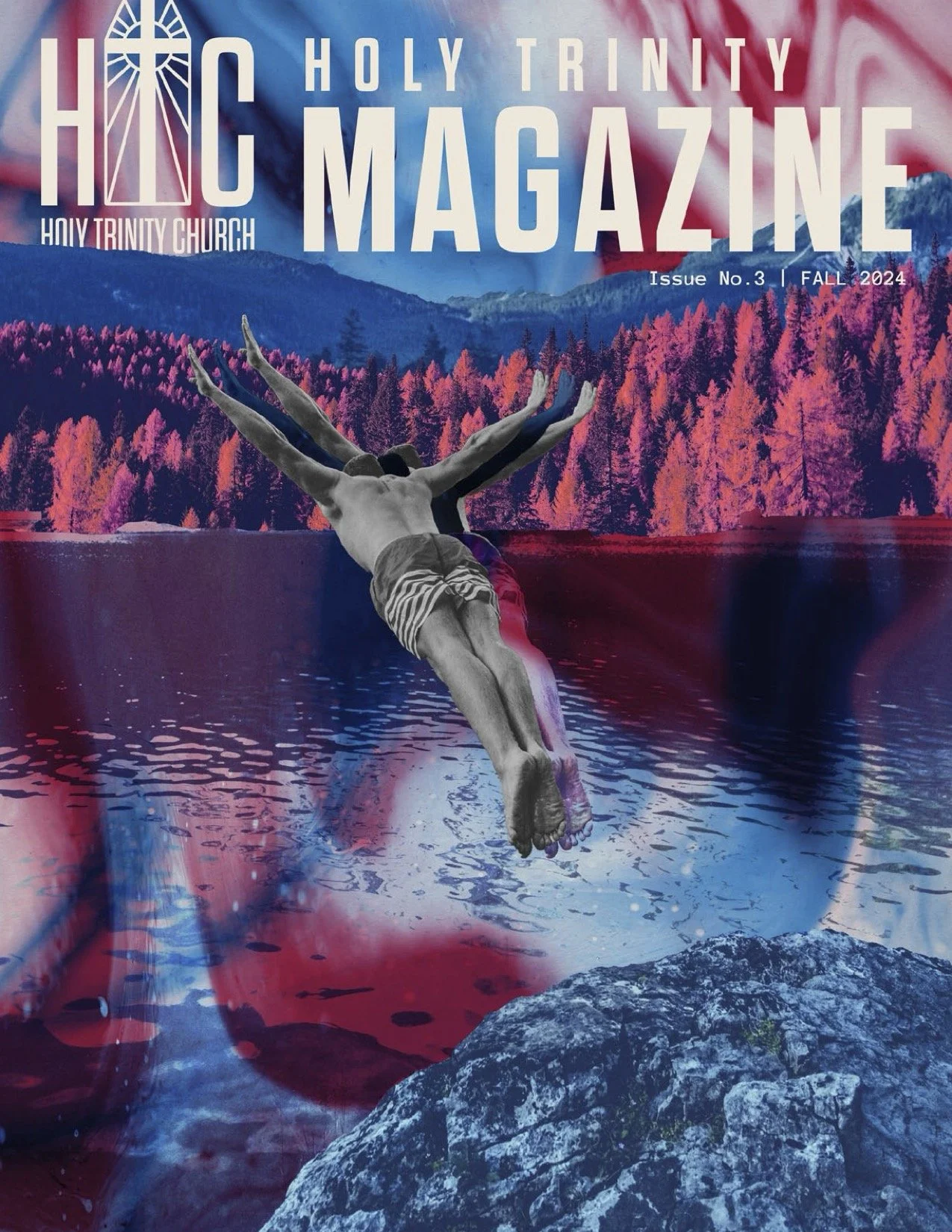
HTC MAGAZINE
HTC Magazine is a biannual print publication that gathers a community's own work — prose, poetry, essays, photography, art — into a single hold-in-your-hands edition. A community's gifts shouldn't end at the lip of Sunday's stage; the writers, photographers, and artists in the seats deserve a venue too. As editor, working with designer Michael Sanders, my job was the lens: finding the through-line in a stack of unrelated submissions and building a format that lets them read as one work rather than an anthology. The pleasure of it is the patchwork — up close, found treasures; at a distance, a single coherent thing.